
Stocking Brushed DC Motors: A Distributor's Guide to Keeping Variants Under Control
-
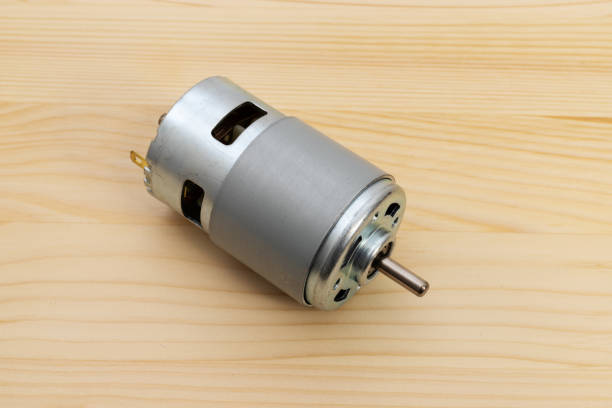
A motor distributor rarely loses money on the motors themselves. The losses come from the wrong motor going to the right customer: a winding that does not match the supply, a shaft that does not fit the coupling, a return that takes a month to resolve. Good stocking habits remove most of that pain before it starts.Why One Frame Becomes Many Part Numbers
A name such as RS775 describes a frame family. MGLORY's own guide makes this point plainly: electrical performance is not fixed by the name. The company lists configurable voltage from 6 to 36 V, configurable speed from 2,000 to 25,000 rpm and configurable power from 5 to 320 W.
The mechanical side varies too. Motors described as RS775 can share a similar can size while using different shafts, mounting details or end caps. A single frame name can therefore hide many genuinely different products, and your catalogue needs to show that.
Organise Stock by Winding, Not by Frame Name
If your system lists one line called "RS775 motor," you will eventually ship the wrong one. Give each winding and mechanical configuration its own part number, and keep the voltage in the description.
This sounds like administrative detail, yet it is one of the most effective guards against returns. The manufacturer's two reference windings show why. The 18 V winding runs at 21,000 rpm with no load, while the 24 V winding runs at 7,000 rpm. A customer who receives the wrong one will notice immediately.
What to Record for Each Part Number
Build a short record for every variant and keep it with the stock item. It should hold the rated voltage, rotation direction, no-load speed and current, the maximum-efficiency point, stall values and the version of the outline drawing. Add wire and connector details and the tolerances.
Most of this comes from a complete rs775 dc motor datasheet. If a datasheet lacks winding resistance, ambient test temperature or duty cycle, ask the manufacturer to supply them before you list the item. A distributor who holds the data can answer technical questions without delay, and fast answers win orders.
Help Customers Name the Right Variant
Buyers often search for the frame name alone. Your sales team can add value by asking a few working-point questions. What is the supply voltage? What speed is needed under load? Is the duty continuous or intermittent?
Those answers also reveal when a different motor fits better. The manufacturer's guidance puts the RS540 toward lighter, compact systems and the RS750 toward lighter pump loads, while the RS775 offers higher output and thermal capacity. Where long life and lower maintenance matter most, it points to the BLDC-5015 brushless motor.
Plan Shelf Space and Freight
Each RS775 weighs about 360 g, so one hundred motors weigh roughly 36 kg before packaging. That simple sum affects carton design and freight planning. The body is about 42.2 mm across and 66.5 mm long, and the published 775 motor dimensions let you plan shelving and carton layouts before the first shipment arrives.
Handle Returns With Data
Many returns are not defects. They are mismatches: wrong voltage, wrong rotation, wrong shaft. Check the part number against the order first. Then compare the claimed fault with the datasheet. A motor stalled under a jammed load draws very high current and heats quickly, which looks like failure but is misuse.
Brushed motors also wear. Frequent starts, high current, elevated temperature and long duty cycles all shorten brush life, so ask how the customer used the motor before assuming a fault.
Work Closely With the Manufacturer
Share your expected annual quantities and your most common customer requests. A manufacturer with over 15 years in micro motor production, as MGLORY reports, can tell you which configurations suit repeat orders and which suit custom projects. Ask for the outline drawing and a representative performance curve for each variant you stock. Ask also how the supplier handles revisions to a drawing or winding, so you know how changes will be communicated before they reach your warehouse. Written confirmation avoids disputes. Keep copies with each record.
Three Questions Customers Always Ask
Prepare standard answers so your team replies consistently. Can the motor run at a different voltage? The winding is built for a supply, so ask the manufacturer for a matching winding instead of improvising. Can it run continuously at stall torque? No. Stall is a short-duration condition with very high current. Is no-load rpm the working speed? No. Speed falls once the motor drives a real load.
Conclusion
Variant control is quiet work, but it protects margin and reputation. Name stock by winding, record the data, ask customers about the working point and settle returns with evidence. Do that consistently and the RS775 becomes an easy line to sell, not a risky one.